


In the ever-evolving world of computing, the central processing unit (CPU) is the brain, orchestrating every task. While most consumers focus on chips in the few hundred to the thousand-dollar range, a rarefied echelon of processors commands prices exceeding $10,000—sometimes significantly so. These aren’t your everyday desktop chips; they reside in the realm of high-performance computing (HPC), enterprise servers, and specialized workstations tackling the most demanding workloads imaginable.
But what justifies such astronomical price tags? What kind of power do these ultra-expensive CPUs pack, and who exactly needs them? Let’s delve into the fascinating world of $10,000+ CPUs.
Beyond Consumer Needs: The Domain of Extreme Processing
These ultra-high-end CPUs aren’t designed for gaming, web browsing, or even most professional creative tasks. Their purpose lies in tackling computational challenges that would bring mainstream processors to their knees. Think:
- Massive Data Analysis: Processing terabytes or even petabytes of information for scientific research, financial modeling, or artificial intelligence.
- Complex Simulations: Running intricate simulations for weather forecasting, fluid dynamics, molecular modeling, and engineering design.
- High-Performance Servers: Powering the backbone of the internet, large-scale databases, and cloud computing infrastructure.
- Professional Rendering: Handling incredibly complex 3D rendering and visual effects for film, animation, and design at the highest fidelity.
- Advanced AI and Machine Learning: Training complex neural networks and running demanding inference tasks.
What Makes a $10,000+ CPU So Special?
The hefty price tag of these CPUs is a result of a confluence of factors:
- Extreme Core Counts: These chips often boast an astonishing number of cores and threads. While a high-end consumer CPU might have 16 or 24 cores, a $10,000+ CPU can easily feature 64, 96, or even more cores. This massive parallelism allows them to tackle highly threaded workloads with incredible efficiency.
- Massive Memory Bandwidth: Handling vast datasets requires equally vast memory bandwidth. These CPUs support multi-channel memory architectures with extremely high speeds, ensuring data can flow in and out of the cores without bottlenecks.
- Huge Cache Sizes: Large amounts of on-chip cache (L1, L2, and L3) allow the CPU to store frequently accessed data closer to the processing units, significantly reducing latency and improving performance.
- Advanced Interconnects: Efficient communication between multiple CPUs in server configurations is crucial. These high-end chips often feature sophisticated interconnect technologies (like Intel’s UPI or AMD’s Infinity Fabric) that enable high-speed, low-latency communication.
- Enterprise-Grade Reliability and Features: These CPUs are built with robust error-correction mechanisms (ECC memory support), advanced virtualization capabilities, and features designed for continuous, mission-critical operation in server environments.
- Cutting-Edge Manufacturing: They are often fabricated using the most advanced and expensive manufacturing processes, yielding higher performance and efficiency.
- Lower Production Volumes: Compared to mainstream CPUs, the production volumes for these specialized chips are significantly lower, contributing to the higher cost per unit.
- Integrated High-End Features: Some may include specialized accelerators or integrated hardware for specific tasks, such as AI inference or cryptography.
Key Players in the Ultra-High-End CPU Market
The primary players in the $10,000+ CPU market are Intel and AMD, with their respective high-end server and workstation product lines:
- Intel Xeon Scalable Processors (High-End Tiers): Intel’s top-tier Xeon Scalable processors, particularly those with the highest core counts and features, can easily surpass the $10,000 mark. These are widely used in enterprise servers and high-performance computing clusters.
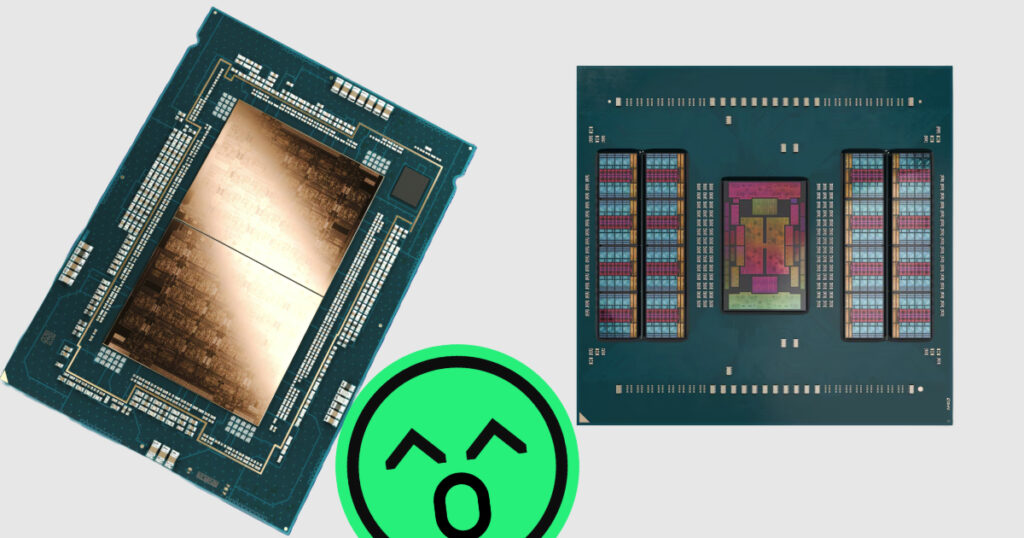
EXAMPLE: Intel Xeon Platinum 8592+ Processor.
- AMD EPYC Processors (High-End Tiers): AMD’s EPYC series has made significant inroads in the server and HPC markets. It offers compelling core counts and memory bandwidth at competitive prices, and some of its highest-performing models also reach or exceed the $10,000 threshold.
EXAMPLE: AMD EPYC 5th Gen 9965.
Who Actually Buys These $10,000+ CPUs?

The customers for these ultra-expensive CPUs are typically large organizations and institutions with demanding computational needs:
- Research Institutions and Universities: For scientific simulations, data analysis, and cutting-edge research.
- Large Enterprises: For powering their critical IT infrastructure, databases, and business intelligence platforms.
- Cloud Service Providers: To build and scale their massive data centers and offer high-performance computing instances.
- Financial Institutions: For complex financial modeling, risk analysis, and high-frequency trading platforms.
- Media and Entertainment Companies: For high-resolution video editing, complex visual effects rendering, and animation production.
- Government Agencies: For national security, weather forecasting, and scientific research initiatives.
The Future of Extreme Processing
The demand for ever-increasing computational power shows no signs of slowing down. As artificial intelligence, machine learning, and data-intensive applications continue to evolve, the market for ultra-high-end CPUs will likely continue to grow. We can expect to see even higher core counts, greater memory bandwidth, more advanced interconnects, and the integration of specialized hardware accelerators in the CPUs of tomorrow, further pushing the boundaries of what’s computationally possible – and potentially their price tags as well.
While a $10,000+ processor might seem like an unimaginable expense for the average user, understanding their purpose and capabilities provides a fascinating glimpse into the cutting-edge computing technology that powers the world’s most demanding tasks. They are the unsung heroes behind groundbreaking research, massive online services, and visually stunning creations.
Afterword
We cannot even speculate about the resale value of a used Intel Xeon Platinum 8000 series or an AMD EPYC 5th Gen processor at present, but these chips are unlikely to end up on the second-hand market. Meanwhile, if you have a used computer to sell, Gadget Salvation will happily work with you to provide a fair estimate and facilitate a pain-free buyback transaction.