Is the Samsung Galaxy Z Fold8 Ultra Worth the $2,100+ Price Tag?
Is Samsung Galaxy Z Fold8 Ultra the best one yet? Sure, the battery life is great, but its camera didn't get the "Ultra" treatment. At $2,099+, this is a phone for people who will actually use the big screen, not those chasing the best camera or the best deal.
In this article
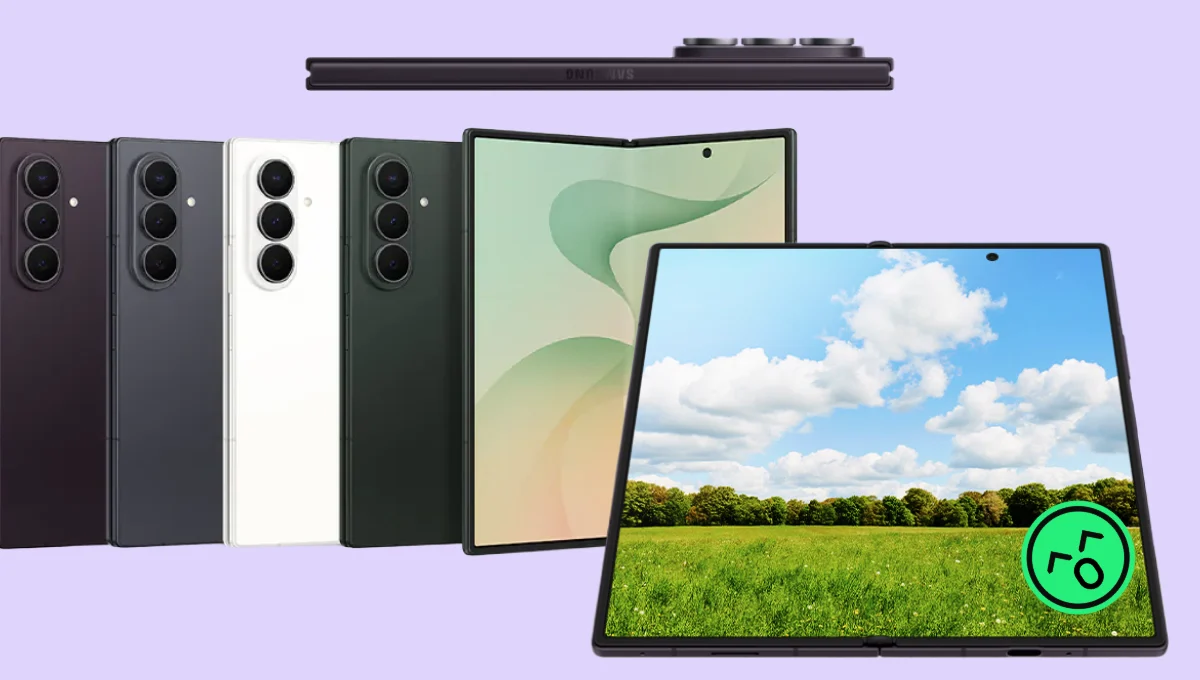
Samsung has officially pushed the boundaries of foldable technology with the Galaxy Z Fold8 Ultra. But starting at an eye-watering $2,099.99 for the base 256GB model and climbing to $2,699.99 for the maxed-out 1TB configuration, it is now one of the most expensive consumer smartphones on the market today.
At a price point that could easily buy a high-end laptop and a top-tier tablet, the question becomes inescapable: is the Z Fold8 Ultra actually worth the steep price, or has mobile tech officially crossed into luxury absurdity?
Galaxy Z Fold8 Ultra: What's Actually New
Let's clear up the naming confusion first. This year Samsung split its Fold line in two: the standard Galaxy Z Fold8 is an entirely new, wider "passport" shape built for media and everyday use, while the Z Fold8 Ultra keeps the tall, narrow body that's defined every Fold since the Z Fold5. If you have a Galaxy Z Fold7, the Ultra is your direct successor — not the phone that shares its base name.
Once you get past that, the Z Fold8 Ultra's changes are real but targeted: a larger silicon-carbon battery, faster charging, a brighter and less creased inner display, a new magnet-assisted hinge that makes the phone easier to pry open, and an upgraded ultrawide camera. Essentially, it's the phone the Z Fold7 should have been all along — just $100 to $280 more expensive, depending on storage.
Z Fold8 Ultra vs. Z Fold7
Side by side, the generational jump is smaller than the price increase suggests, but the changes that did land are the ones Fold7 owners complained about most:
| Spec | Galaxy Z Fold7 | Galaxy Z Fold8 Ultra |
|---|---|---|
| Starting price | $1,999.99 | $2,099.99 |
| Battery | 4,400 mAh | 5,000 mAh (silicon-carbon) |
| Rated endurance (EU label) | 40.5 hours | 51 hours |
| Wired charging | 25W | 45W |
| Peak brightness | 2,600 nits | 3,000 nits |
| Ultrawide camera | 12MP | 50MP |
| Telephoto camera | 10MP, 3x optical | 10MP, 3x optical (unchanged) |
| Frame material | Titanium backplate | Advanced Armor aluminum with Flex Titanium display layer |
| Hinge opening | Standard tension | Magnet-assisted, easier one-hand open |
What Does $2,100+ Buy You?
To evaluate the price tag, you have to look at the engineering packed into this generation. The Z Fold8 Ultra isn't an incremental spec bump — it's a structural overhaul.
- Ultra-thin titanium engineering: unfolded, the phone measures 4.1mm thin and weighs 215 grams. Thanks to the new Flex Titanium hinge, it feels remarkably light without sacrificing structural rigidity.
- Peak display tech: an expansive 8.0-inch inner Dynamic LTPO AMOLED 2X display that hits 3,000 nits of peak brightness, backed by an upgraded anti-reflective coating and a significantly reduced crease.
- Pro-grade cameras: borrowing hardware from Samsung's Ultra lineup, it features a 200MP main sensor alongside an upgraded 50MP ultrawide lens.
- Flagship performance: the Snapdragon 8 Elite Gen 5 for Galaxy, a 5,000 mAh silicon-carbon battery, and a promise of seven years of Android OS updates.
Full Spec Breakdown
The essentials, at a glance:
| Component | Specification | Details |
|---|---|---|
| Inner display | 8.0-inch AMOLED | 120Hz, 3,000 nits peak brightness |
| Cover display | 6.5-inch AMOLED | 120Hz, Gorilla Glass Ceramic 3 |
| Chipset | Snapdragon 8 Elite Gen 5 for Galaxy | 3nm, octa-core |
| Memory | 12GB or 16GB RAM | 256GB, 512GB, or 1TB storage; no microSD |
| Main camera | 200MP, f/1.7 | OIS, multi-directional PDAF |
| Ultrawide camera | 50MP | Upgraded from 12MP on the Z Fold7 |
| Telephoto camera | 10MP | 3x optical zoom, unchanged for three generations |
| Battery | 5,000 mAh | Silicon-carbon cell |
| Charging | 45W wired | 20W wireless (Qi2.2), 67% in 30 minutes |
| Build | 215g, 4.1mm unfolded | Flex Titanium hinge, IP48 rating |
| Software | Android 17 with One UI 9 | 7 years of major OS upgrades |
| Colors | 3 finishes | Graphite, Cream, Violet Shadow |
| Starting price | $2,099.99 | 256GB with 12GB RAM |
Battery & Charging: The Upgrade That Actually Matters
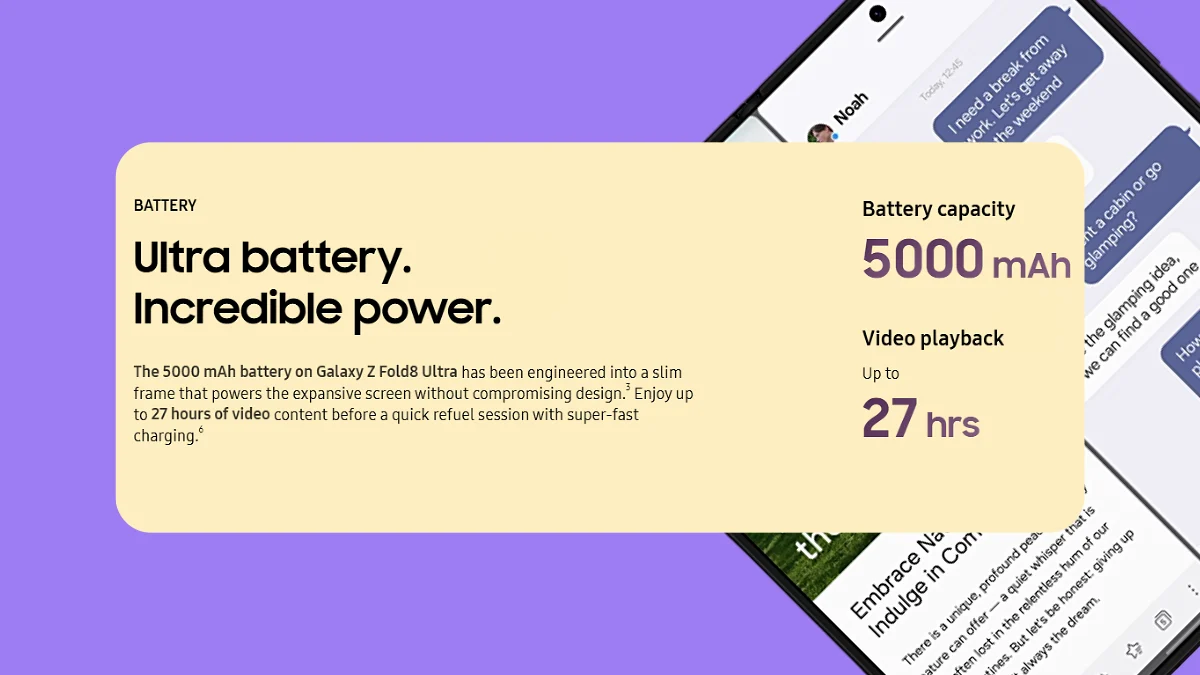
The upgrade you feel on day one
| Phone | Rated endurance | Battery | Relative |
|---|---|---|---|
| Galaxy Z Fold7 | 40.5 hours | 4,400 mAh | |
| Galaxy Z Fold8 Ultra | 51.0 hours | 5,000 mAh |
Chart by Gadget Salvation
Based on leaked EU energy label endurance ratings. Real-world battery life varies by usage, brightness, and network conditions.
That's roughly a 25% jump in rated endurance, plus charging to 67% in 30 minutes — up from a charging speed that hadn't moved in years. It's the single upgrade that will be felt on day one, every day.
The Camera Problem
This is where the "Ultra" name stops holding up. The 200MP main sensor is genuinely excellent, and bumping the ultrawide from 12MP to 50MP is a meaningful upgrade for cropping and detail. But the telephoto lens — the camera most people actually judge a flagship on — is the same 10MP, 3x optical zoom unit Samsung has shipped for three generations running, as Benks documented in its Fold8 camera breakdown.
Reviewers who spent hands-on time with the phone flagged this directly. Rival foldables have started shipping considerably higher-resolution telephoto sensors at similar price points, which makes a three-year-old zoom camera feel out of place on a phone that now costs over $2,000, according to CNET's hands-on. If mobile photography — especially zoomed shots — is your top priority, a Galaxy S26 Ultra or a rival flagship slab will outperform the Z Fold8 Ultra for less money. Buyers weighing value over spec-sheet bragging rights may find the same logic pushes them toward a mid-tier flagship entirely, the way it does with the iPhone 17e on the Apple side.
Who Is the Target Audience for the Galaxy Z Fold8 Ultra?
Samsung clearly built the Fold8 Ultra for specific power-user niches rather than the general public:
- The executive and mobile power user: professionals who need to review spreadsheets, edit documents side by side, manage communication channels, and run desktop-style workflows anywhere without lugging around a laptop bag.
- Bleeding-edge tech enthusiasts: early adopters who want the absolute latest in mobile engineering and are willing to pay a heavy premium to hold the most futuristic smartphone in the room.
- Outdoor and travel-heavy users: the brighter, anti-reflective display and longer battery life solve two of the main complaints about earlier Folds.
The Reality of Reselling Used Galaxy Flagships
Before dropping over two grand on a phone, understanding its long-term value retention is crucial — and foldables are the worst-performing flagship category on this measure. SellCell's analysis of trade-in transaction data found that Samsung's Z Fold and Z Flip models lose roughly 63.7% of their value in the first six months, against 48.3% for the standard Galaxy S line. That 15-point gap is the widest between foldable and conventional models of any brand tracked.
The picture doesn't improve much at the twelve-month mark. Across the category, foldables retain about 35% of their launch value after a year, while traditional smartphones hold roughly 45%. Owners of foldables lost an average of $997.69 in that first year, about $392 more than owners of conventional phones. This is the same pattern that makes Android flagships depreciate faster than iPhones, amplified by a higher starting price.
It's worth correcting a common assumption here: the Galaxy Z Fold line does not hold value better than rival foldables. In SellCell's eighteen-month comparison, the OnePlus Open retained the most value of any foldable analyzed, while Samsung's Fold and Flip series ranked among the weakest. If you plan to sell a used Galaxy foldable, the realistic expectation after a year is somewhere near a third of what you paid, not half.
Samsung does partly offset this curve with its trade-in ecosystem, frequently offering guaranteed trade-in values of $1,000 or more for recent Galaxy flagships during pre-order windows. If you upgrade every year, those promotions are worth checking against a cash offer before you commit either way.
Foldables lose two-thirds in year one
| Time since launch | Value retained | Value lost | Relative |
|---|---|---|---|
| At launch | 100% | 0% | |
| 6 months (Samsung Z Fold and Z Flip) | 36% | 64% | |
| 12 months (all foldables) | 35% | 65% | |
| 18 months (all foldables) | 29% | 71% |
Chart by Gadget Salvation
Sources: SellCell trade-in transaction data on foldable versus standard phone depreciation and twelve-month foldable value retention. The six-month figure is specific to Samsung's Z Fold and Z Flip lines; the twelve- and eighteen-month figures cover the foldable category as a whole. Actual values vary by condition, configuration, storage tier, and market timing.
The steepest part of that curve is the first six months, which means timing matters more than condition for most sellers. Gadget Salvation gives you an instant quote on the phone you're replacing, a free insured shipping label, and payment within two business days of inspection — no listings, buyer messages, or no-shows to manage. Selling before the next Unpacked, rather than after it, is what separates the 36% row from the 29% one.
The Verdict
The Galaxy Z Fold8 Ultra is an incredible technological achievement. If you have the disposable income and your daily routine heavily leverages multi-screen productivity, it is easily the best foldable money can buy. For everyone else, standard bar flagships — or the slightly more affordable base Z Fold8 — offer a much more forgiving return on investment.
| Our rating | 4 out of 5 |
|---|---|
| Starting price | $2,099.99 (256GB) |
| Best for | Multi-screen productivity, S Pen note-taking, long days away from a charger |
| Skip if | Zoom photography matters most, or you already own a Z Fold7 |
| Biggest upgrade | 5,000 mAh silicon-carbon battery and 45W wired charging |
| Biggest letdown | 10MP, 3x telephoto carried over for a third generation |
| Rating basis | Published Samsung specifications, leaked EU energy-label data, and third-party hands-on coverage. Not yet independently tested by Gadget Salvation. |
Our rating reflects published specifications, leaked EU energy-label endurance figures, and third-party hands-on reviews from outlets including CNET — it is not based on first-hand testing by Gadget Salvation. We will revise it once we have handled retail units through our buyback process.